What is a Lot in Forex? Lot Sizes and Position Size Simply Explained
Uncover the impact of standard, mini, and micro lots on your profits and learn to calculate the perfect trade size.
Read MoreMehran Najafi
No Comments
Forex Basics
January 4, 2026
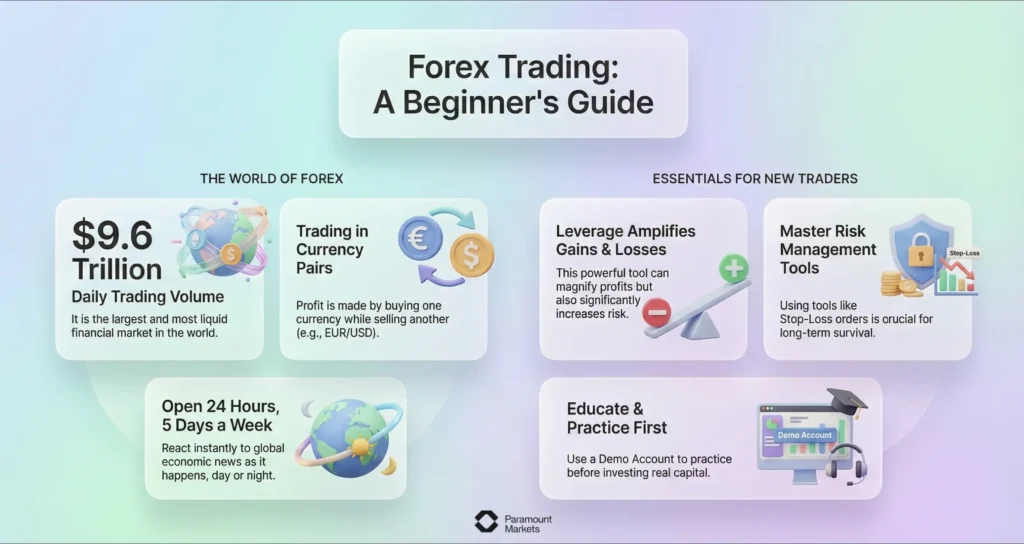
Foreign Exchange Market or simply Forex is the world’s most traded market. It is a market where you exchange one currency to another at a predetermined rate, or foreign exchange rate. According to the Bank for International Settlements, the average daily trading volume in the Forex market hit $9.6 Trillion in 2025. The Forex market size is expected to surpass $1088.73 billion in 2029, making Foreign Exchange quite important in the global financial market. If you are looking for a practically easy guide to learn what is forex, how it works, and why it is important enough to be mastered, this easy-to-understand guide is all you need to get started today.
The Forex market, short for Foreign Exchange market, is essentially where currencies worldwide are traded.
Let me put it this way: imagine a giant, always-open bazaar, but instead of spices or textiles, the goods are money (various currencies) itself. That’s exactly the foreign exchange, or Forex(FX), market. It’s the world’s hub for trading currencies.
Let me put it this way: imagine a giant, always-open bazaar, but instead of spices or textiles, the goods are money (various currencies) itself. That’s exactly the foreign exchange, or Forex(FX), market. It’s the world’s hub for trading currencies.
FX market is a global marketplace for currencies, where they are traded for one another. It is the largest and most liquid market in the world. It is decentralized, meaning there is no physical location or exchange like the stock market. Forex differs from the stock market as it is electronic, which means 24/7 operations, five days a week, and that trading is global.
Currency markets operate by trading currencies in pairs like EUR/USD which represents Euro against US Dollar.
Forex trading involves making predictions about whether one currency will strengthen or weaken against another currency.
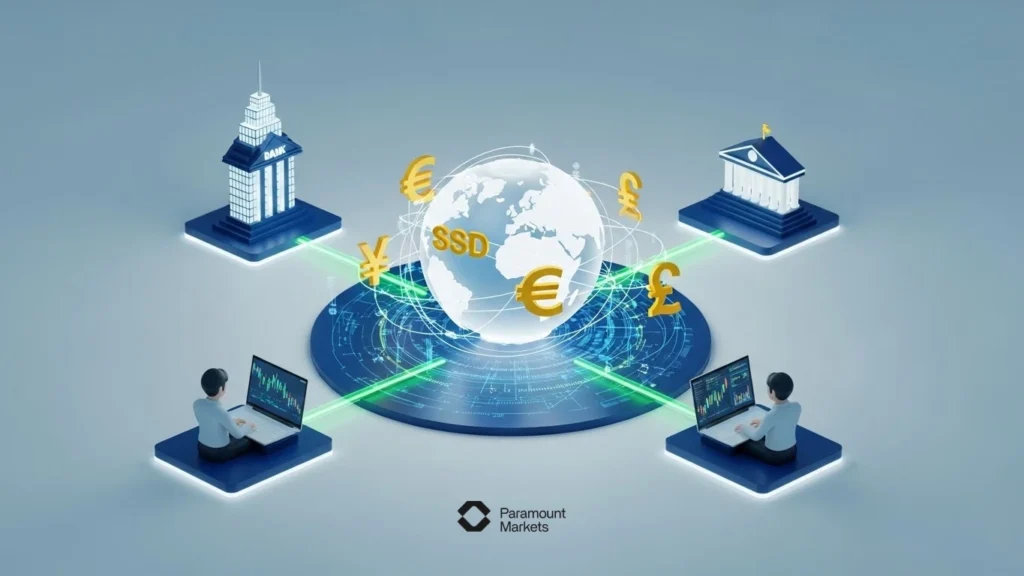
The market participants, or “Forex players”, as we call them, are banks, brokers, investment houses, corporations, governments, individual traders and other end users.
Imagine you live in the US and want to buy goods or services from Germany. You would first have to exchange your currency(the US Dollar) for the currency of Germany (Euros). This is how it is done, within the Forex market.
In addition, people trade on the forex market for profit. In other words, they hope to buy low and sell high, just like in any other market.
So, the main takeaway for the Forex Market function is that:
The Forex market facilitates global trade and finance by enabling international currency exchange.
Before I explain the core concepts in detail, let me highlight the importance of learning the Forex market for beginners and explain why Forex (FX) matters to individual traders.
The Forex market is one of the leading players in global economic interactions.
While the total daily size of Forex trading reaches $7.5 trillion, the spot market (most relevant to traders) is around $2 trillion per day. This is a proof of how important the market is in the global financial system.
Traders can make money in Forex trading by profiting from the changes in exchange rates between currencies. Beginner traders can make money by correctly predicting favourable rate movements by opening a Standard account with brokers like NorthStar DMCC.
Economic factors and indicators significantly influence currency values, making the forex market dynamic and informative for traders. It is why the forex market serves as a real-time indicator of global economic health.
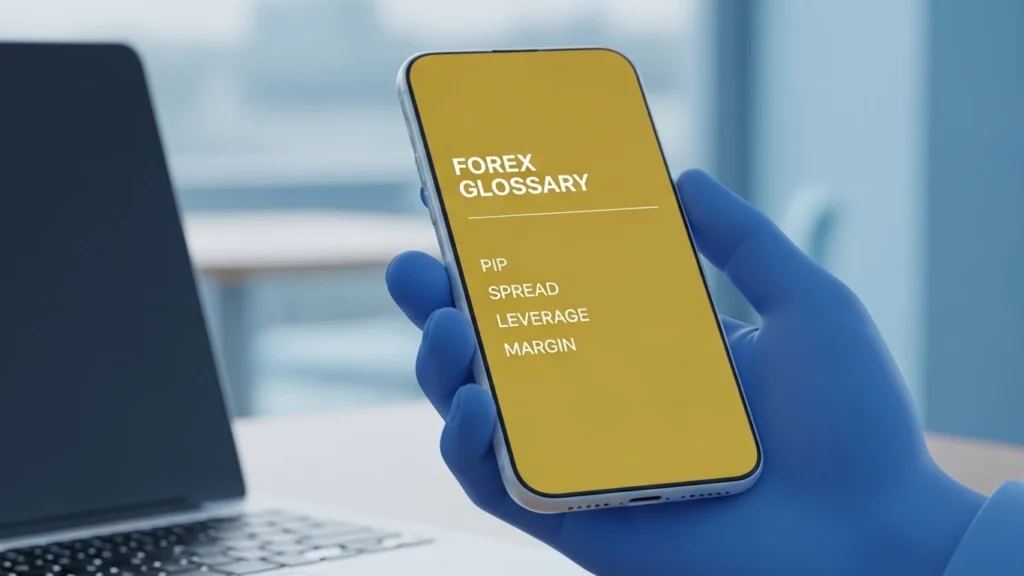
If you want to learn forex trading, first, you must know how to speak the market language. While I explain what is forex trading and the essentials to becoming a successful trader in the next few guides, below is a list of forex terms with simple examples for beginners.
I put together a table highlighting the differences between Forex and the stock markets to give you a better overview of what is forex and how it differs from the old stock market we all know about.
| Feature | Forex Market | Stock Market |
|---|---|---|
| Trading Hours | 24 hours/day, 5 days/week | Fixed trading hours (typically 9:30 AM–4:00 PM) |
| Market Size | Larger, more liquid market | Smaller compared to Forex |
| What is Traded | Currency pairs | Company shares |
| Volatility | Generally more volatile | Usually less volatile |
| Influencing Factors | Economic indicators, political events, interest rates | Company performance, industry trends, market conditions |
| Additional Benefits | No dividends | Potential dividends and voting rights |
The foreign exchange (FX) market is home to a wide variety of participants, including individual retail traders like you and me. In fact, retail traders make up approximately 5.5% of the Forex market and trade alongside banks, hedge funds, and corporations.
Forex trading can be suitable for anyone who has an interest in global economics, is comfortable with risk management, and has the time and patience to learn how to properly analyze the market. However, it is also important to note that approximately 70-80% of retail forex traders lose money, usually due to a lack of education and poor risk management.
So before you get started with your forex trading journey, make sure to get the proper education first. You can start with a demo account with a trusted broker such as NorthStar DMCC, and keep in mind that successful trading requires patience and discipline.
Forex trading or “currency trading” is simply the practice of trading—buying and selling—currencies to make a profit. The trading process takes place within the Forex market, which I explained in detail above. Below, I walk you through the essential concepts in forex trading to prepare you for more advanced concepts.
I cover how currency trading works and the detailed advanced strategies needed to generate a consistently profitable trade in other tutorials.
The following is a quick and practical to do list to help the new trader gain a better understanding of what and where they should be trading Forex.
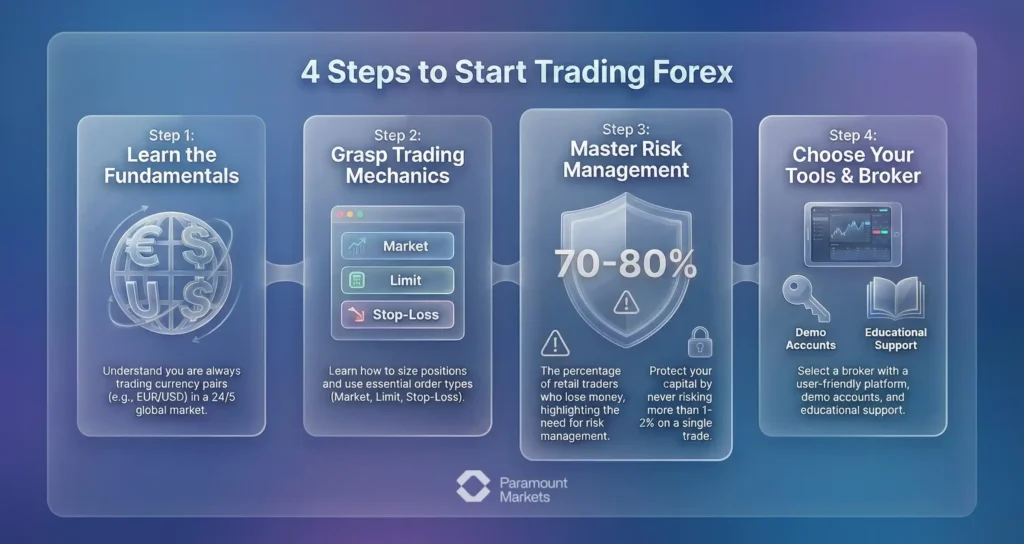
The forex market has certain common concepts and rules that need to be understood in order to trade successfully. So, first of all, make sure you read the information above as well as information about the basic dynamic trading process.
• As you know from the previous information, while trading Forex, you always trade two currencies at the same time. For example, when trading EUR/USD, if you think that the Euro will strengthen against the US Dollar, then you buy EUR/USD. The point is that forex trading is all about pair currencies and their relationships. Each currency pair has a price that tells you how much of the quote currency you need to buy one unit of the base currency.
• The forex market is open 24 hours a day, five days a week, which means that trading is nonstop. The market trades electronically via networks and the world’s major financial centres of London, New York, Tokyo and Sydney dominate market activity during their respective trading sessions.
The forex market has unique mechanics which every newcomer should learn.
Position Sizing: Know how to size your positions in accordance with your account size and risk appetite. NorthStar DMCC Broker offers flexible lot sizes, starting from micro-lots, which are perfect for beginners managing their risk.
Know your order types: Market Orders, Limit Orders, Stop-Loss Orders and Take-Profit Orders. If you are interested in doing some extra research about orders, I highly recommend reading the only book dedicated solely to the topic of order types in Forex: Stock Trading – Order Types by Bill Thompson .
The high volatility and leverage in Forex can amplify both profits and losses. Risk management is crucial to protecting your capital from large and rapid drawdowns.
Without proper risk management, traders often succumb to emotional decision-making, which can exacerbate losses and jeopardize their long-term viability in the market.
Risk management is one of the most critical skills that you need to acquire to become a forex trader and earn actual profit.
Below are some of the most efficient forex risk management strategies:
Never risk more than 1-2% of your trading capital on a single trade. This conservative approach helps ensure longevity in the market and protects you from significant losses.
Develop a comprehensive trading plan, including entry rules, exit strategies, and risk parameters. Use educational resources to fine-tune your trading strategy.
Spread your risk over more than one currency pair. Don't put all your eggs in one basket.
Know how much you could potentially earn relative to how much you could lose. Aim for a ratio that justifies the risk.
Set a level where a trade automatically closes once the loss reaches a certain point to prevent catastrophic losses.
Determine how much capital to invest in each trade based on your overall risk tolerance and account size.
Just a reminder that success in forex trading comes with being well-educated and practising. Beginner forex traders can get the support they need from a trustworthy broker to help them understand the advanced features of the forex platform and to start and continue trading with confidence.
Checklist for selecting your broker:
The key to becoming a successful trader in the forex market is choosing the right broker. While the right broker depends on your personal preferences, NorthStar DMCC is the ideal choice for beginner and advanced traders because of its reliability, super user-friendly platform, no hidden fees, high level of transparency, competitive prices, and more. Do not miss the big opportunity and sign up today.
Forex (FX) is a world of opportunity for those willing to make the plunge and learn how to trade the currency pairs in the global marketplace. Understanding the basics, using the right tools, and following good risk management can help a trader make it through the trials and tribulations that come with trading.
One last reminder, never stop learning and practising. Our educational resources will show you what is forex and our website has lots more beginner’s guides so you can become a currency trading pro.
Take the next step on your forex and currency trading journey and open an account with NorthStar DMCC to access a reliable platform, educational resources and customer support that will help you achieve your trading goals.
Yes! You can open a free demo account to try out any of our trading account types and explore the platform risk-free.
While all accounts can be used for different strategies, the Pro Account is often favored by long-term traders due to its zero spreads, VPS support, and premium features.
ParamountMarket uses the MetaTrader5 (MT5) platform, known for its powerful charting and analytical tools. MT5 supports various operating systems, making it accessible for traders using different devices
If you’re an active trader and want tighter spreads, the ECN Account is a great choice. While it has a commission, it gives you direct access to the market and lower spreads than the Standard Account.
All account types give access to the same trading platform, tools, and charting features. However, the Pro Account includes VPS, giving professional traders an edge in execution.
Disclaimer: The information provided in this article is for educational and informational purposes only and does not constitute financial advice, investment recommendations, or an offer to buy or sell any financial instruments. Trading Foreign Exchange (Forex) and Contracts for Difference (CFDs) involves a high level of risk and may not be suitable for all investors. Leverage can work against you as well as for you. Before deciding to trade, you should carefully consider your investment objectives, level of experience, and risk appetite. You should not invest money that you cannot afford to lose.

Mehran Najafi
2026-01-07
Uncover the impact of standard, mini, and micro lots on your profits and learn to calculate the perfect trade size.
Read More
Mehran Najafi
2026-01-05
Master financial markets. Explore types like stocks and forex, their functions, and essential steps to start trading.
Read MoreYour email address will not be published. Required fields are marked *